

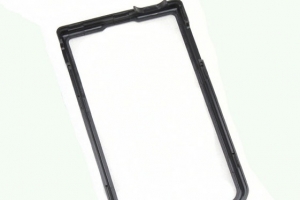
The installation and debugging of plastic molds is an important inspection work, which can effectively find out the problems of molds and produced parts, so as to make targeted modifications to make the mold meet the requirements. So what work needs to be prepared before mold installation and debugging? During the production process, we must pay attention to the personal safety of the staff, ensure that the integrity of the mold and equipment is not damaged, and the function of the machine is
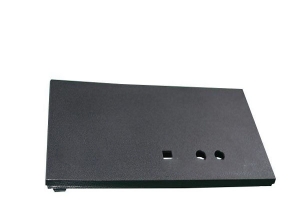
The water transportation of plastic molds plays an important role in the molding of injection molded parts. Problems should be avoided when transporting water to avoid obvious appearance quality defects on the surface of the final molded parts. So what should be paid attention to when transporting water for molds? The core components of the mold must be well protected. When transporting water, be careful to prevent the copper head of the water pipe, screwdriver, and utility knife from scratching them.
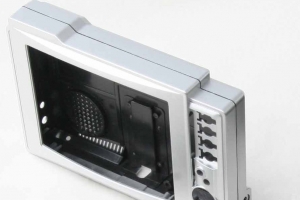
After the injection mold is manufactured, it must be inspected by the customer. The inspection can be roughly divided into four stages. Only when no serious problems are found during the inspection can the mold be confirmed to be ready for delivery. Single debugging and online debugging inspection mainly test whether the assembled mold can be successfully installed on the processing equipment, whether the mold can be stable and produce parts that meet the standards, and whether the mold can be carefully inspected.
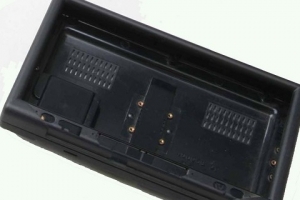
To ensure the normal operation of the plastic mold, the concave and convex mold inserts can cooperate with each other. The dimensions and tolerances must be strictly specified during the design. The verticality between the insert surface and the cutting edge cannot exceed 0.01 mm, and there is no reverse taper, looseness up and down, and the insert seams cannot cross and overlap. The fixed parts of the insert and the cutting edge are not allowed to be welded unless it is required during the design.
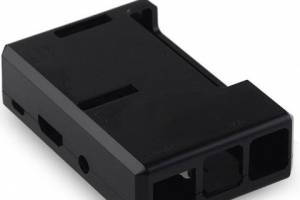
Plastic molds are very important for injection molding production. In order to ensure the safety of molds and workers, it is necessary to prepare countermeasures and prevention measures in advance. For the rigidity, strength, processability and quality of the mold, it is generally required that the mold can continuously produce one thousand products without serious quality and defect problems. The mold should be equipped with working and storage limiters, and the automated line mold
In order to facilitate installation and replacement, the flanging type plastic mold needs to separate the easily damaged inserts. Considering the problems of later assembly and adjustment, the inserts in the working part are preferably of retaining wall structure. Under normal circumstances, the overhang of the knife block cannot exceed ten millimeters. If there are special requirements, both parties must determine them in advance, and try to minimize the joint surface of the flanging knife and the shaping knife.
The principle of surfacing technology is to weld the filler metal to the damaged part of the plastic mold surface. Butt welding technology is widely used in the plastic mold industry, which effectively improves the performance and life of the mold, reduces production costs, improves work efficiency, and prevents cracks in the mold to ensure the stability and quality of the mold. In the mold manufacturing process, it is inevitable to perform trimming, and the materials used must be
Brush plating is a technology that repairs scratches, roughness, grooves and wear on the surface of plastic mold cavities. After the repair is completed, the mold life can be effectively improved, and the wear resistance, hardness and surface roughness of the mold surface can reach the original performance standards. The use of brush plating technology is generally under normal temperature and no groove conditions. The local surface of the workpiece is quickly electrochemically deposited with metal or
The welding material of plastic mold is the most basic condition and the most critical part for welding repair. According to different mold materials and different heat treatment states of mold welding repair, the most suitable welding material should be selected. For welding of molds in annealing state and not heat treated, the material and the parent material should be as similar as possible to avoid cracking during the heat treatment process, which will affect the performance.
In order to ensure the welding quality of plastic mold components, it is very important to select the right and reasonable materials. There are two commonly used welding metal materials, medium carbon steel and high carbon steel, and they have different characteristics during welding. When medium carbon steel is used for welding, the hardening tendency of the heat affected zone gradually increases, and cracks and pores are prone to occur. In order to avoid this situation,
The weld and the surrounding areas are heated and cooled to different degrees. The heat affected zone of the weld is the welding joint of the plastic mold. The formation of the fusion weld requires local heating and melting to produce a common molten pool at the joint of the workpiece, and then solidification and crystallization to become a whole. At high temperatures, a part of the coating of the welding rod will decompose into gas.
The benefits of welding plastic mold components: 1. Welding metal structural parts saves materials compared to general riveting, and can also reduce weight, improve the carrying capacity of welded parts and reduce energy loss. 2. The welding method is relatively flexible and can effectively simplify the manufacturing process of complex parts and large parts, increase processing speed, shorten working time, and reduce production time.
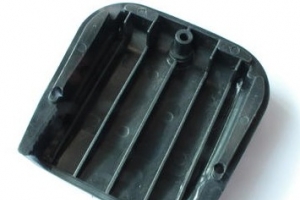
Classification of Injection Mold EDM Machine Tools: Slow-feed wire cutting machine tools, the electrode wire is made of copper wire and moves in one direction at a low speed. The main method is to continuously supply the electrode wire, which is replenished after the electrode is worn out. The processing quality is good, the work is relatively stable and uniform, the jitter amplitude is small, and the production efficiency is relatively high. It is suitable for processing workpieces with high precision requirements, roundness and linear dimensions.
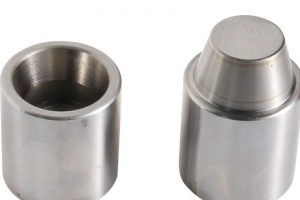
In order to improve the precision of the parts, it is necessary to cut during the injection mold processing. So what are the cutting technologies related to injection molds? 1. Micro-wire cutting technology is mainly used for small parts that are difficult to process in large machinery. The electrode wire is a relatively small tungsten wire. The discharge energy is weak during processing, which has extremely high requirements for the pulse control system and machine tool accuracy.
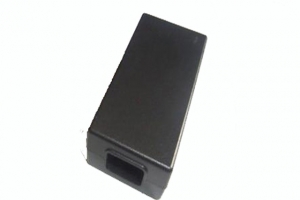
Wire EDM is a processing technology for injection molds that can control and adjust the size of workpieces. Reasonable wire EDM processing technology can effectively ensure the quality of workpieces and the performance of molds. The analysis and review of drawings is an important step, and it is the key to the processing quality and comprehensive technical indicators of workpieces. The first thing to do is to pick out workpieces that cannot be processed or are difficult to process. What are they?

QR code attention
Shenye plastic


